Most of what decides a car accident claim happens in the first twenty minutes, while you are shaken, maybe hurt, and standing next to a stranger whose car just hit yours. Nobody is at their best in that moment. This checklist is short on purpose, so you can pull it up on the phone in your pocket.
Your phone matters because the scene does not last. The cars get towed, the glass gets swept up, the other driver’s story gets smoother with each retelling, and the people who saw it walk away. Photos and video taken in those minutes are often the clearest evidence of how the crash happened.
First, make it safe
Before any photo, get yourself and anyone with you out of traffic if you can. Turn on your hazard lights. Call 911 if anyone is hurt, if a driver seems impaired, or if the other driver refuses to share information.
New York law requires every driver involved in a crash to stop and exchange information (Vehicle and Traffic Law §600). Take photos only when it is safe to stand where you are standing. A picture is never worth stepping into a live lane on Queens Boulevard.
Take the wide shots first
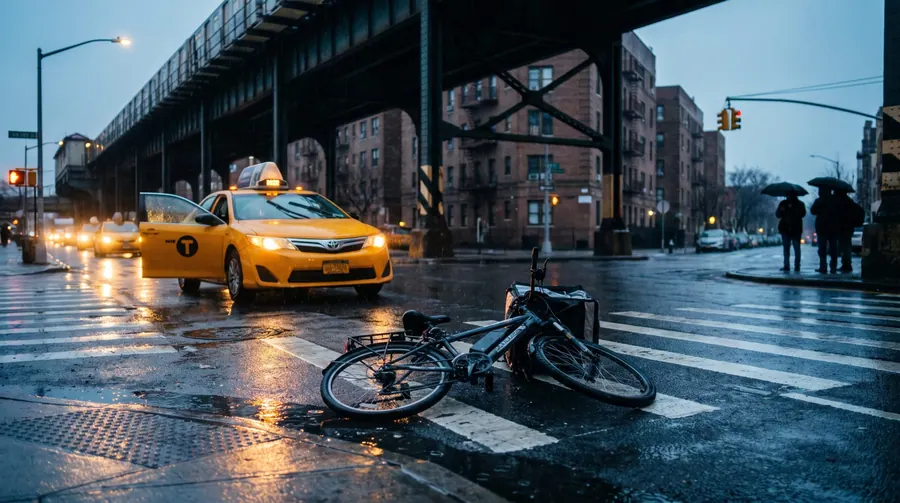
Before anyone moves the vehicles, take a few photos from a distance that show the whole scene: where each car came to rest, the lanes, the intersection, the traffic lights and signs. Stand at a corner and turn slowly so the photos overlap.
These wide shots answer the questions that come up months later. Which lane was each car in? Was there a stop sign? How far past the crosswalk did the other car stop? Close-ups of a dented bumper cannot answer any of them.
Then the details
Once the wide shots are done, move closer:
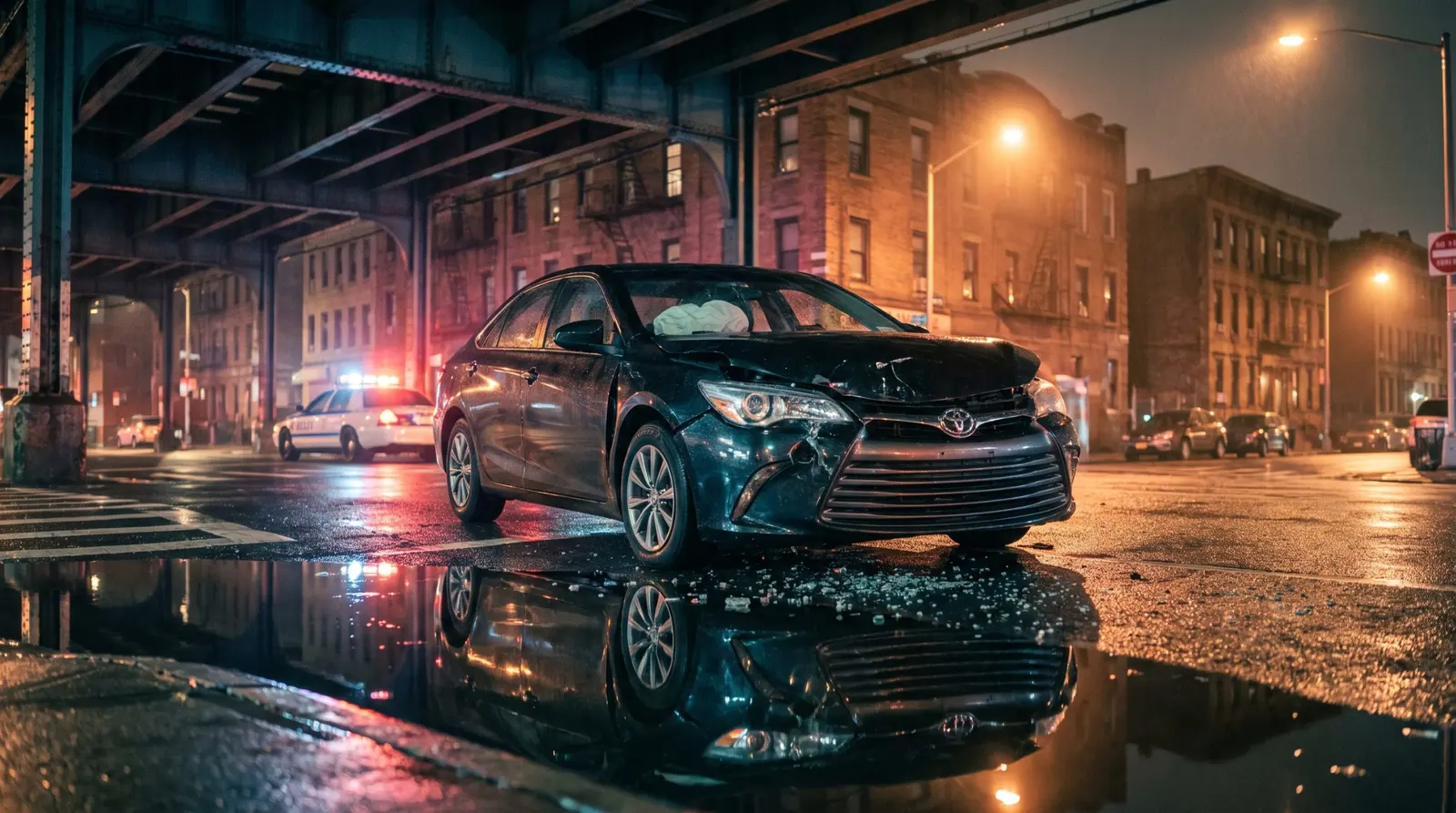
- Damage to every vehicle involved, from several angles
- License plates of every vehicle
- The other driver’s license, insurance card and registration, photographed rather than copied by hand
- Skid marks, broken glass, debris and fluid on the road
- Traffic signals, and whether they were working
- Road conditions such as potholes, construction, missing signs or blocked views
- Weather and lighting, especially at dusk or at night
- The inside of your car, including deployed airbags and anything thrown around
If a commercial truck, bus, taxi or rideshare car was involved, photograph any company name, DOT number or TLC license number on the vehicle.
Photograph your injuries, and keep doing it
Take pictures of visible injuries at the scene and at the hospital. Then keep going. Bruises often darken over the next several days, and swelling changes. A short series of dated photos shows how the injury developed in a way a medical chart does not.
Record a short video
A slow video walking around the scene, with you saying the date, time and location out loud, captures details you would never think to photograph. It takes less than a minute. Your phone also records where and when each photo and video was taken, which helps later.
Witnesses leave quickly
Ask anyone who saw the crash for their name and phone number. People who stop to help usually leave within minutes, so ask right away. If a witness agrees, record a short video of them saying what they saw. A witness who has no connection to either driver is often the most persuasive person in the case.
Look for cameras
Look up and around. Storefront cameras, apartment building cameras, doorbell cameras, dashboard cameras in other cars, and cameras on MTA buses may have recorded the crash. Photograph each camera you see and note which business or building it belongs to.
Businesses decide for themselves how long to keep their video, and many record over it on a rolling basis. The sooner someone asks them to save it, the better the odds it still exists.
What to say, and what not to say
At the scene, stick to the facts. Exchange information, check on the other people involved, and tell the police what happened in plain terms.
Do not apologize, even out of politeness, and do not guess about fault, speed or distances. “I’m sorry” can be repeated later as an admission. “I think I was going about thirty” becomes a number you are held to. If you do not know something, it is fine to say so.
Do not argue with the other driver. If they get aggressive, step away and wait for the police.
If you were walking or riding a bike
Pedestrians and cyclists are often too hurt to take any pictures. Ask a bystander to take them with your phone or theirs and send them to you. Keep your clothing, shoes, helmet and bike exactly as they were after the crash, and do not repair the bike yet. Our page on pedestrian and bicycle accidents covers the rest.
After you leave the scene
- Get medical care the same day, even if you feel fine.
- Back up your photos and videos to the cloud, and keep the originals. Do not edit or filter them.
- Get the police report number and the precinct from the officer before you leave.
- If anyone was hurt, file the DMV accident report, form MV-104, within 10 days (Vehicle and Traffic Law §605).
- File your no-fault application with the insurer responsible for your No Fault benefits within 30 days.
- Decline to give a recorded statement to the other driver’s insurance company until you have talked to a lawyer. Our article on what to say when the adjuster calls explains why.
If you were hurt in a crash in Queens or elsewhere in New York City, our car and truck accident page walks through what comes next. Send us the photos you took, and we will tell you what they show.
Common questions
01Should I move my car before taking pictures?
Only if it is unsafe to stay where you are, or if the police tell you to. If you can safely take a few photos first, do it, because the position of the vehicles after the crash often shows how it happened.
02Do I have to report a crash in New York?
If anyone was hurt, call 911 from the scene. Each driver must also file a report with the DMV, form MV-104, within 10 days when there is an injury or property damage over $1,000 (Vehicle and Traffic Law §605).
03What if I was too hurt to take photos?
Ask someone at the scene to take them with your phone or theirs and send them to you. A family member can also return to the location soon after to photograph the intersection, the signals and any cameras nearby.
This guide explains New York law in general terms and was last reviewed on September 18, 2026. It is not legal advice about your situation. For that, ask us directly.

Eduard Yadgarov, Esq.
Eduard “Eddie” Yadgarov is the founder and principal attorney of EY Legal PLLC in Rego Park, Queens. He earned his J.D. at St. John’s University School of Law and has practiced since 2017. Clients have direct access to their attorney and our team throughout the case.
More about Eddie